
CALCULATION CONTEXT · 6 MIN READ
For a birth chart, time zone
is part of the input.
International users need to distinguish birth-place clock time, daylight saving time, and the calculation convention used by a charting tool.
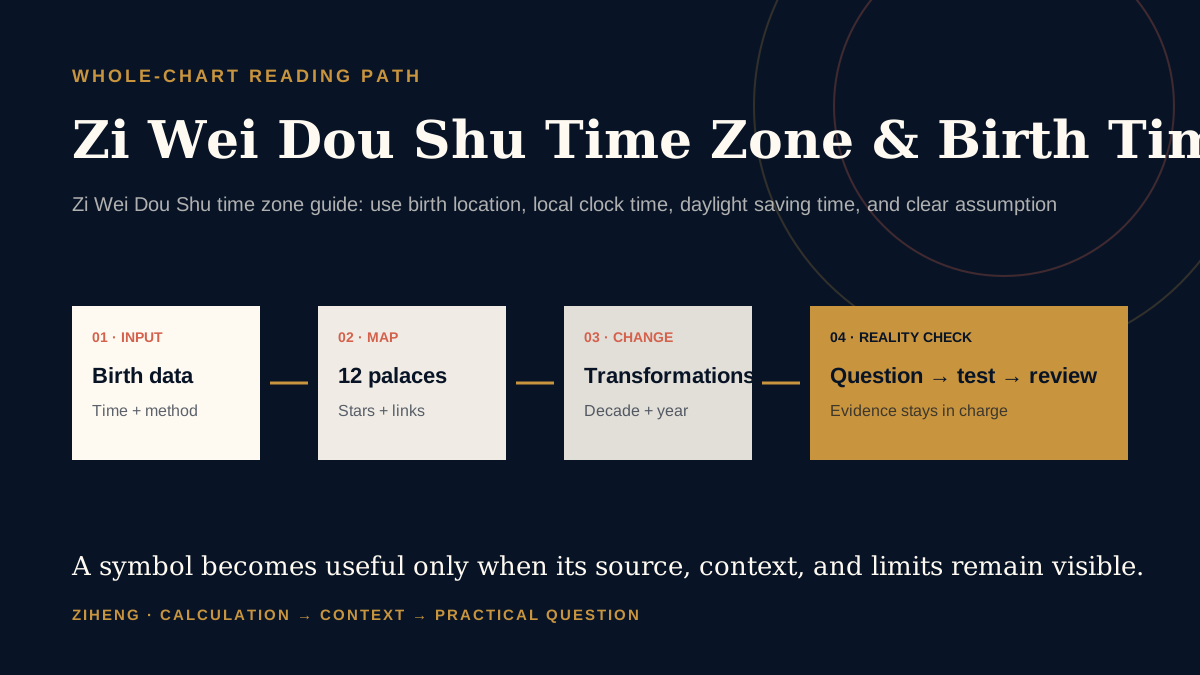
Zi Wei Dou Shu tools use birth date and time, so a birth location matters whenever clock conventions differ. The safest starting point is the local civil time recorded at the birthplace on the day of birth, not the time zone where you live now.
Check the original record
Write down the birth city, country, date, and recorded local time. If daylight saving time was in effect, do not silently ignore it. Historical time-zone rules can be complicated, especially for births near a clock change.
Know the tool’s convention
Some schools adjust for true solar time; others use recorded civil time or a standard regional convention. Different conventions can produce different results near a boundary. A transparent calculator should say what it accepts rather than claiming universal precision.
Use boundaries carefully
If the birth time sits near a two-hour transition, compare adjacent windows and note the difference. This is more useful than treating a few minutes of uncertainty as proof that one chart is unquestionably correct.
If your time is uncertain, use the birth-time unknown guide; then learn the palace map.
FROM GUIDE TO YOUR CHART
Where does this show up?
Find it in your own chart.
Use the free chart to locate the evidence behind “Zi Wei Dou Shu Time Zone & Birth Time Guide.” Explore the connected palaces and active timing, then compare the interpretation with your actual situation.
USE THE BIRTHPLACE CLOCK TIME
Start your chart
with clear assumptions.
Frequently asked questions
Should I use my current time zone?
No. Use the local clock time and location where you were born, then state any uncertainty.
Does every Zi Wei school use true solar time?
No. Calculation conventions differ, so compare tools only when their assumptions are clear.