Reviewed by Ziheng Editorial against the public method · Updated 16 August 2026 · Editorial policy
Direct answer
True solar time adjusts recorded civil clock time by location and the equation of time. It matters most when a recorded birth sits close to a two-hour pillar boundary, the 23:00 late-Zi change, or a solar-term boundary—not as a decorative precision setting.
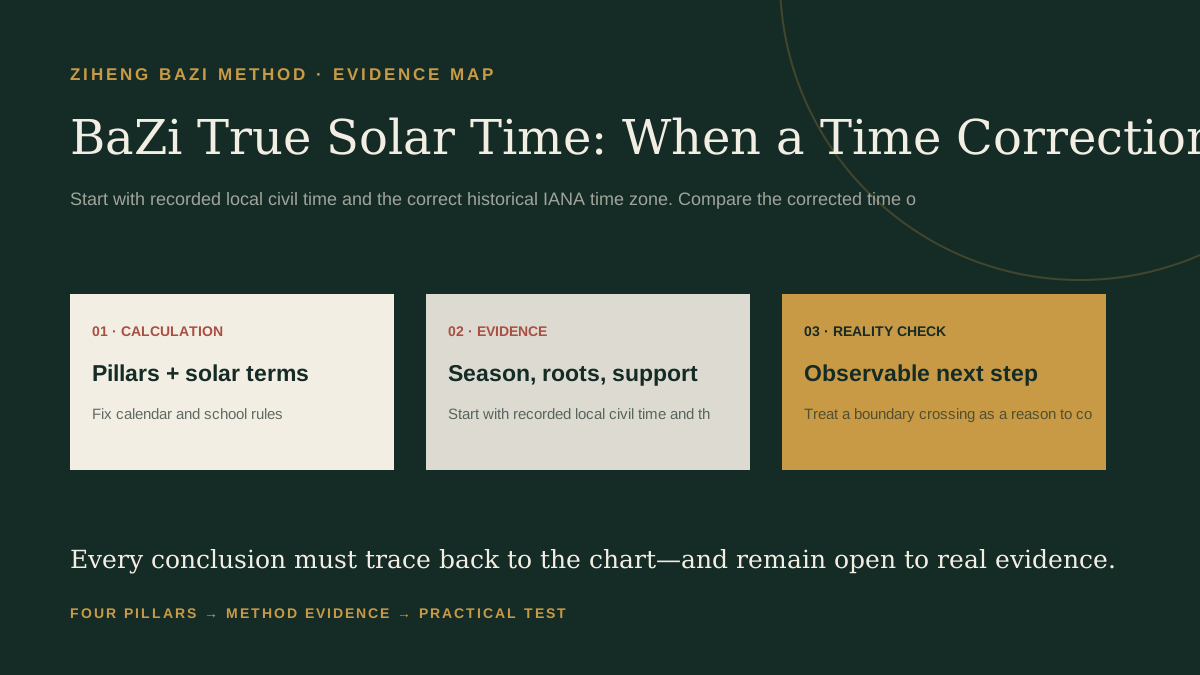
Read it in this order
Start with recorded local civil time and the correct historical IANA time zone. Compare the corrected time only when reliable longitude is available, then show whether the pillar actually changes. A few minutes of correction should not be exaggerated into a new life verdict.
From symbol to real life
Treat a boundary crossing as a reason to compare two transparent scenarios, not to select the more flattering answer. If both scenarios share a planning theme, that shared part is more useful than forcing certainty.
FROM ARTICLE TO YOUR FOUR PILLARS
Do not stop at the concept. Check your own evidence.
Calculate the Four Pillars and current Da Yun free, then test the evidence required by “BaZi True Solar Time: When a Time Correction Matters”: Start with recorded local civil time and the correct historical IANA time zone. Compare the corrected time only when reliable longitude is available, then show whether the pillar actually changes. A few minutes of correction should not be exaggerated into a new life verdict.
See my complete BaZi chart →What this cannot do
This method cannot guarantee wealth, health, legal, work, or relationship outcomes. It is for cultural reflection and planning questions; major decisions still require real evidence and qualified advice.
FAQ
Do I need true solar time for BaZi?
Not always. It matters most when the corrected time could cross a two-hour pillar boundary, the 23:00 late-Zi day boundary, or a solar-term boundary. Otherwise the correction may leave the chart unchanged.
What evidence should remain visible when reading BaZi True Solar Time: When a Time Correction Matters?
Start with recorded local civil time and the correct historical IANA time zone. Compare the corrected time only when reliable longitude is available, then show whether the pillar actually changes. A few minutes of correction should not be exaggerated into a new life verdict.