CAREER TIMING · DECISION GUIDE · 7 MIN READ
When should I change careers?
Build a readiness window, not a prediction.
Timing layers can organize preparation, testing, and review. They cannot promise an offer, promotion, or successful move.
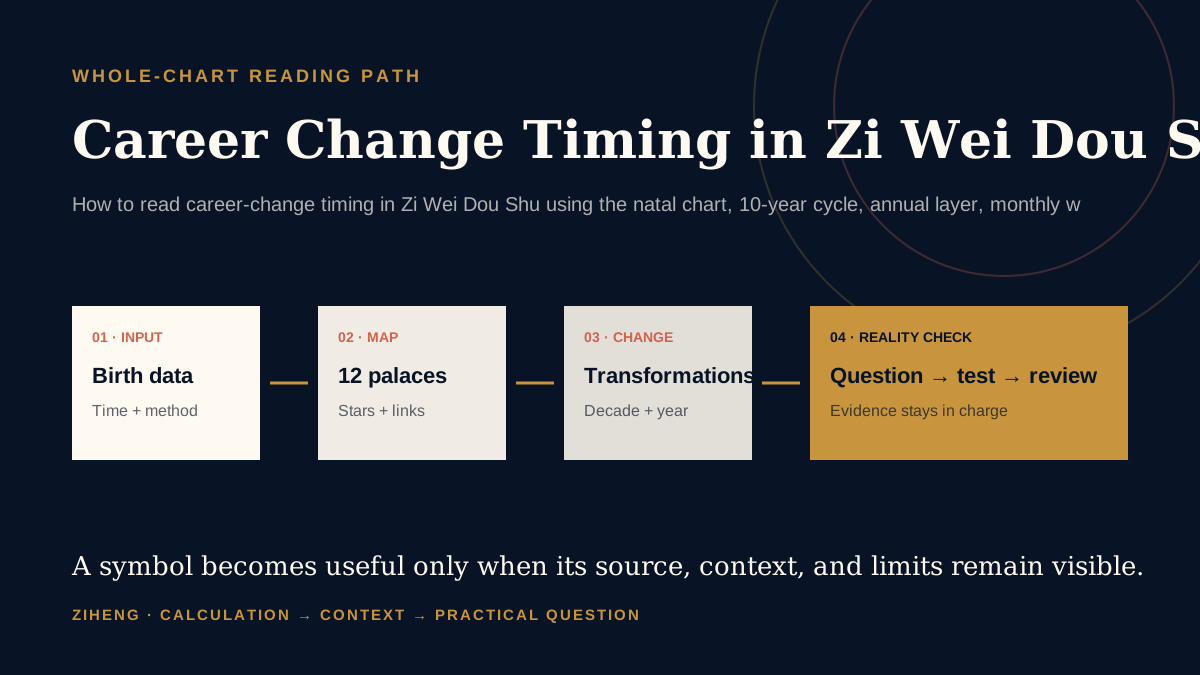
Direct answer: Start with readiness, not a date. The natal Career, Life, Wealth, and Travel relationship describes the base pattern. The active decade tells you which domain deserves attention, while annual and monthly layers can organize when to test, prepare, or review.
A whole-chart reading order
Use four gates: direction, evidence, resources, and capacity. A supportive-looking annual month is not useful if the role is undefined, the market evidence is weak, the financial buffer is absent, or health and family constraints make the move unsafe.
Turn the reading into a bounded test
Choose a decision date. Before it arrives, complete one market conversation, one visible work sample, one compensation or revenue comparison, and one downside plan.
Limits that matter
Timing language should never override employment contracts, immigration rules, financial obligations, medical needs, or qualified advice.
Keep the evidence visible
Write the palace, star, Four Transformation, decade, or annual placement behind each interpretation. Then write the practical translation separately. This makes it possible to disagree with the translation without pretending the chart calculation changed.
FROM GUIDE TO YOUR CHART
Recognize the idea?
Test it against your own timing.
Use the free chart to locate the evidence behind “Career Change Timing in Zi Wei Dou Shu.” Check the current decade and annual layer; continue only if the personal pattern fits your lived context.
PUT THE QUESTION BESIDE YOUR OWN MAP
Start with the chart.
See your personal evidence.
The full twelve-palace chart is free. Your next screen keeps “Career Change Timing in Zi Wei Dou Shu” as the active question and shows the placements used to answer it.
Frequently asked questions
Does a strong Career month mean I should resign?
No. Treat it as a review or experiment window. A career decision still requires evidence, resources, contractual review, and a downside plan.
Which timing layer comes first?
Natal structure first, active decade second, annual layer third, and monthly windows last. Finer timing should never replace the broader context.