Reviewed by Ziheng Editorial against the public method · Updated 16 August 2026 · Editorial policy
Direct answer
Day Master strength is a structured argument about seasonal support, roots, visible allies, and drains or controls. It should be reported as strong, balanced, weak, or borderline with evidence—not as a fake-precise percentage.
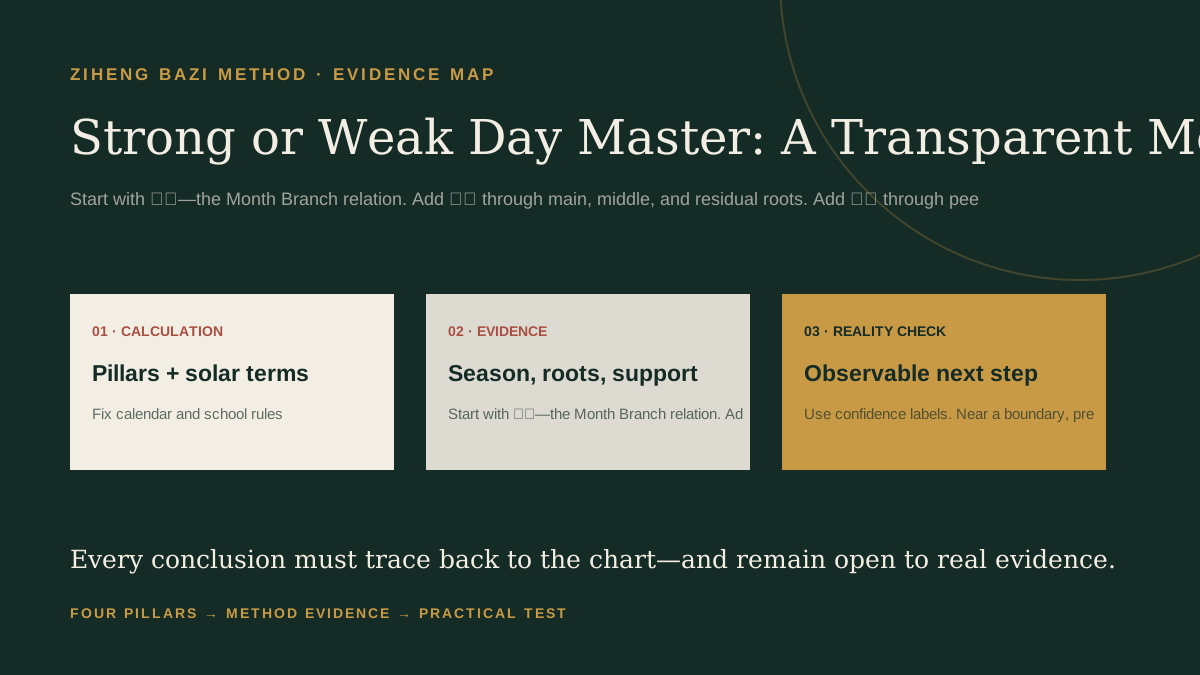
Read it in this order
Start with 得令—the Month Branch relation. Add 得地 through main, middle, and residual roots. Add 得勢 through peers and resource versus output, wealth, and authority. Finally check climate independently.
From symbol to real life
Use confidence labels. Near a boundary, present both plausible readings and avoid letting a one-point score reverse every recommendation. The useful question is which conditions improve stability and action.
FROM ARTICLE TO YOUR FOUR PILLARS
Do not stop at the concept. Check your own evidence.
Calculate the Four Pillars and current Da Yun free, then test the evidence required by “Strong or Weak Day Master: A Transparent Method”: Start with 得令—the Month Branch relation. Add 得地 through main, middle, and residual roots. Add 得勢 through peers and resource versus output, wealth, and authority. Finally check climate independently.
See my complete BaZi chart →What this cannot do
This method cannot guarantee wealth, health, legal, work, or relationship outcomes. It is for cultural reflection and planning questions; major decisions still require real evidence and qualified advice.
FAQ
Can two practitioners judge strength differently?
Yes. Practitioners may weight season, roots, combinations, transformations, climate, and school-specific rules differently. A responsible result shows the evidence and marks borderline charts instead of hiding disagreement behind a percentage.
What evidence should remain visible when reading Strong or Weak Day Master: A Transparent Method?
Start with 得令—the Month Branch relation. Add 得地 through main, middle, and residual roots. Add 得勢 through peers and resource versus output, wealth, and authority. Finally check climate independently.