Reviewed by Ziheng Editorial against the public method · Updated 16 August 2026 · Editorial policy
Direct answer
The Four Pillars of Destiny—also called BaZi or the Eight Characters—turn the year, month, day, and hour of birth into four stem-and-branch pillars. Year often frames inherited and wider context, Month the seasonal and operating environment, Day the Day Master and close self-world, and Hour later expression, projects, or future-facing themes.
Read it in this order
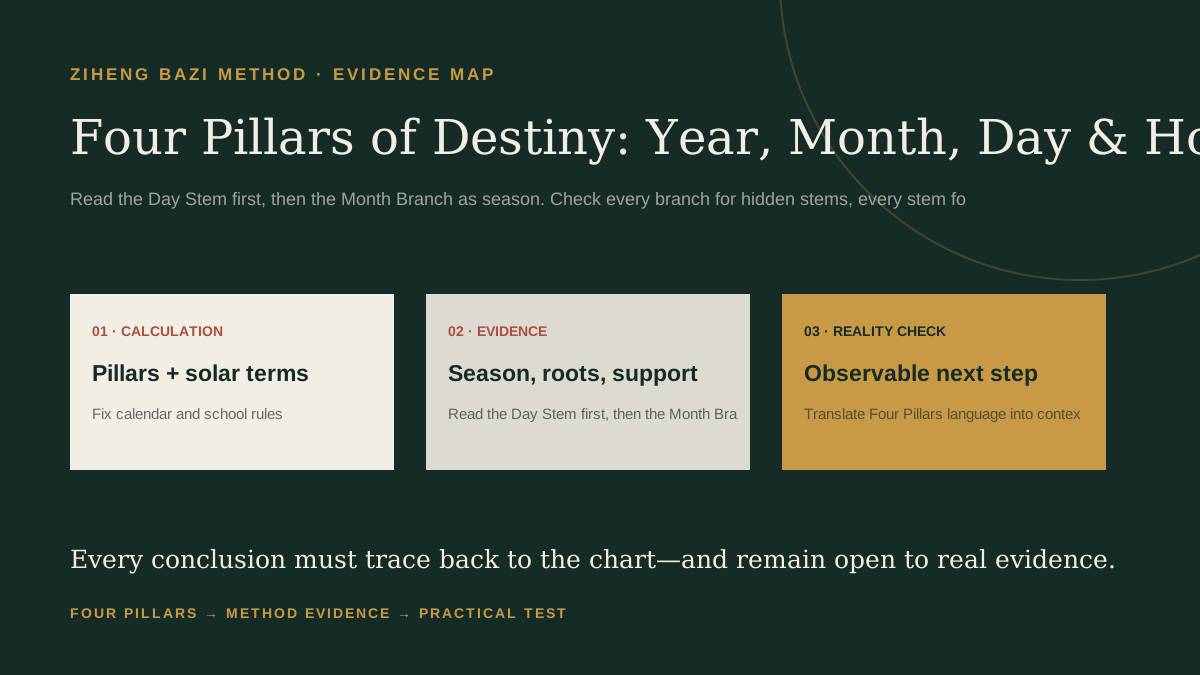
Read the Day Stem first, then the Month Branch as season. Check every branch for hidden stems, every stem for its Ten God relation, and relationships across all Four Pillars. Do not assign a life event to one character alone.
From symbol to real life
Translate Four Pillars language into contexts rather than people. For example, Month pressure can become a question about work systems and expectations; Hour uncertainty should narrow claims, not fill them with guesses.
FROM ARTICLE TO YOUR FOUR PILLARS
Do not stop at the concept. Check your own evidence.
Calculate the Four Pillars and current Da Yun free, then test the evidence required by “Four Pillars of Destiny: Year, Month, Day & Hour”: Read the Day Stem first, then the Month Branch as season. Check every branch for hidden stems, every stem for its Ten God relation, and relationships across all Four Pillars. Do not assign a life event to one character alone.
See my complete BaZi chart →What this cannot do
This method cannot guarantee wealth, health, legal, work, or relationship outcomes. It is for cultural reflection and planning questions; major decisions still require real evidence and qualified advice.
FAQ
Which Four Pillar is most important in BaZi?
No pillar works alone. The Day Stem provides the reference point and the Month Branch provides the seasonal context, but roots, hidden stems, visible relationships, and timing determine how the whole chart is read.
What evidence should remain visible when reading Four Pillars of Destiny: Year, Month, Day & Hour?
Read the Day Stem first, then the Month Branch as season. Check every branch for hidden stems, every stem for its Ten God relation, and relationships across all Four Pillars. Do not assign a life event to one character alone.