TOPIC HUB · TIMING · 7 MIN READ
Decade, year, month.
Context before precision.
Read natal structure first, decade context second, annual focus third, and monthly windows last.
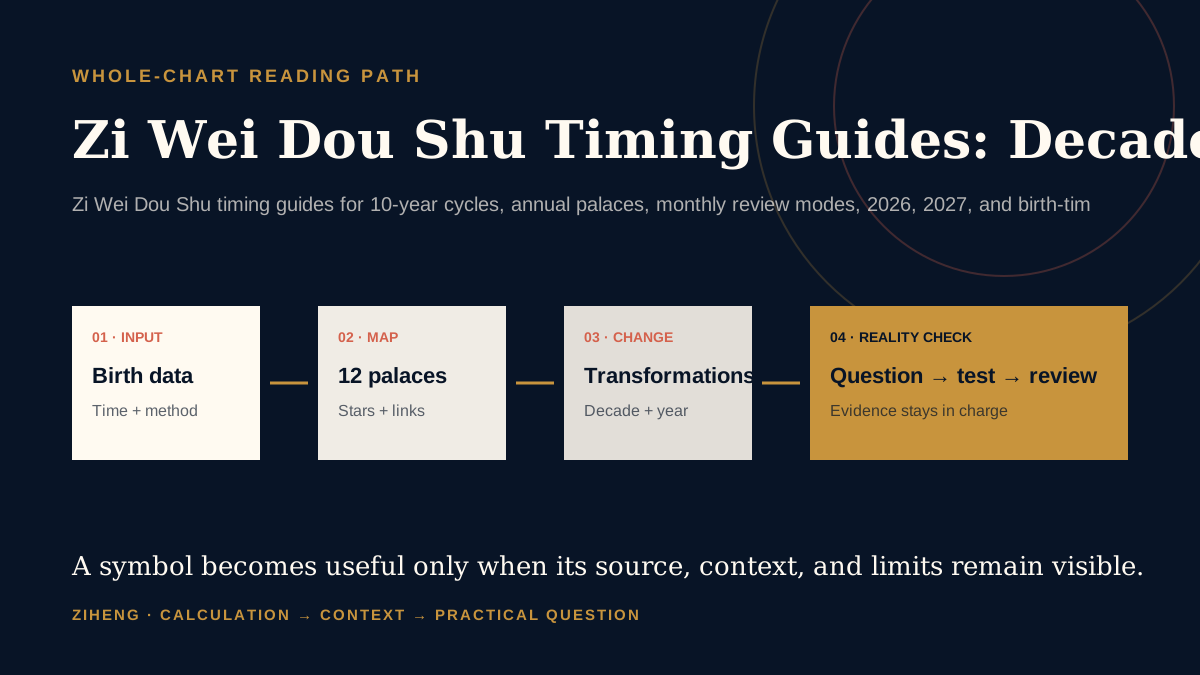
Start here: Finer timing can feel more exciting, but it is also easier to overstate. Ziheng uses timing to assign planning modes—build, connect, review, recover—and keeps real constraints and evidence in charge.
Browse this topic
01 · GUIDE
10-year cycles
Open the guide, then return the concept to your own complete chart.02 · GUIDE
2026 annual layer
Open the guide, then return the concept to your own complete chart.03 · GUIDE
2027 annual layer
Open the guide, then return the concept to your own complete chart.04 · GUIDE
Monthly planning
Open the guide, then return the concept to your own complete chart.05 · GUIDE
Unknown birth time
Open the guide, then return the concept to your own complete chart.06 · GUIDE
Time zones
Open the guide, then return the concept to your own complete chart.A reliable reading standard
Keep calculation, traditional interpretation, and practical translation separate. Name the chart evidence behind a statement, acknowledge birth-time uncertainty, and convert symbolism into a bounded question or experiment rather than a guaranteed outcome.
FROM GUIDE TO YOUR CHART
Recognize the idea?
Test it against your own timing.
Use the free chart to locate the evidence behind “Zi Wei Dou Shu Timing Guides: Decades, Years & Months.” Check the current decade and annual layer; continue only if the personal pattern fits your lived context.
PUT THE QUESTION BESIDE YOUR OWN MAP
Start with the chart.
See your personal evidence.
The full twelve-palace chart is free. Your next screen keeps “Zi Wei Dou Shu Timing Guides: Decades, Years & Months” as the active question and shows the placements used to answer it.
Frequently asked questions
Should I read one page and stop?
No. A topic page teaches one part of the system. Return it to the complete chart and its connected palaces before forming a conclusion.
Can these guides predict an outcome?
No. They explain a traditional symbolic framework and offer reflection questions. They do not guarantee events or replace professional advice.