Reviewed by Ziheng Editorial against the public method · Updated 16 August 2026 · Editorial policy
Direct answer
BaZi, also called Four Pillars of Destiny, maps the year, month, day, and hour of birth into eight stem-and-branch characters. It is a traditional timing and pattern language—not a scientific diagnosis or a fixed verdict.
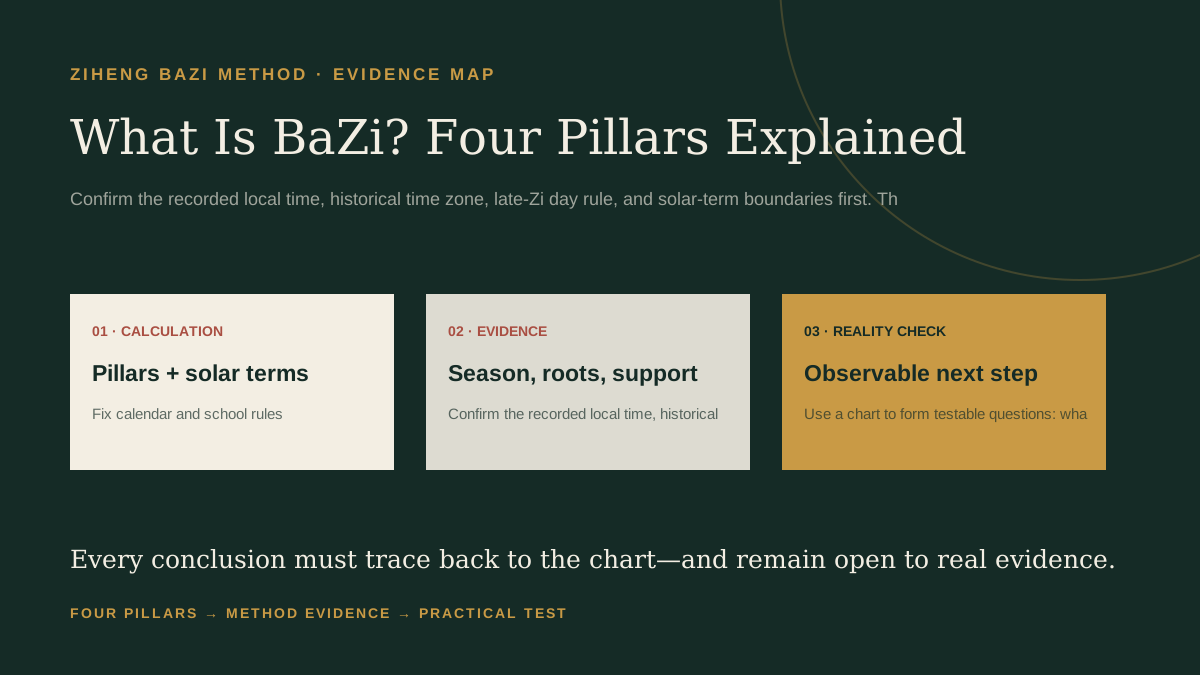
Read it in this order
Confirm the recorded local time, historical time zone, late-Zi day rule, and solar-term boundaries first. Then read the Day Master, month order, roots, visible support and pressure, climate, structure candidate, and luck cycles in that order.
From symbol to real life
Use a chart to form testable questions: what environment supports your way of working, where pressure accumulates, and which planning horizon deserves attention. Keep decisions anchored in evidence from real life.
FROM ARTICLE TO YOUR FOUR PILLARS
Do not stop at the concept. Check your own evidence.
Calculate the Four Pillars and current Da Yun free, then test the evidence required by “What Is BaZi? Four Pillars Explained”: Confirm the recorded local time, historical time zone, late-Zi day rule, and solar-term boundaries first. Then read the Day Master, month order, roots, visible support and pressure, climate, structure candidate, and luck cycles in that order.
See my complete BaZi chart →What this cannot do
This method cannot guarantee wealth, health, legal, work, or relationship outcomes. It is for cultural reflection and planning questions; major decisions still require real evidence and qualified advice.
FAQ
Is BaZi the same as fortune telling?
BaZi belongs to a traditional symbolic and calendrical practice. Ziheng uses deterministic calendar calculations, but the interpretation is not scientifically validated and should not be treated as a fixed verdict.
What evidence should remain visible when reading What Is BaZi? Four Pillars Explained?
Confirm the recorded local time, historical time zone, late-Zi day rule, and solar-term boundaries first. Then read the Day Master, month order, roots, visible support and pressure, climate, structure candidate, and luck cycles in that order.